
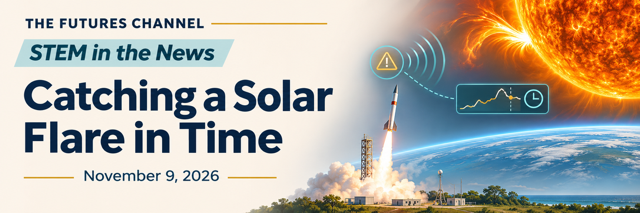
A solar flare may release an extraordinary burst of energy, but scientists trying to study one face a very practical problem: they cannot know exactly when or where it will appear.
On November 4, NASA described a new alert system designed to close that gap. It combines X-ray and ultraviolet observations from NASA’s Solar Dynamics Observatory, NOAA’s GOES satellites and ground-based observatories. Within minutes of detecting a flare, the system can identify its location and estimate how long it is likely to remain active. That information helps a rocket team decide whether there is enough time to launch an instrument.
The timing matters because a sounding rocket has only about five minutes to make its observations before returning to Earth. By then, the flare might already be fading. NASA says the alert system supported rocket launches in April 2024, while an enhanced version used during a May 2026 mission helped scientists observe three small flares. The current event is NASA’s November publication and explanation of the system—not a new rocket launch on November 4.
This development makes a natural companion to The Futures Channel’s earlier video Space Weather. Created for grades 4–8, the two-minute video introduces solar flares and the work of space-weather forecasters. Its accompanying mathematics includes measurement, scientific notation, wavelength, geometry and probability.
For a short classroom activity, show the video and then give students NASA’s description of the alert system. Ask teams to construct a decision timeline with five stages: detection, analysis, alert, launch decision and observation. Students should identify the information required at each stage and the consequences of a delayed or incorrect prediction. Older students can also discuss the tradeoff between launching on uncertain evidence and missing a rare event.
Discussion question: When an event is brief and unpredictable, how should scientists decide whether the available evidence is strong enough to launch an experiment?